
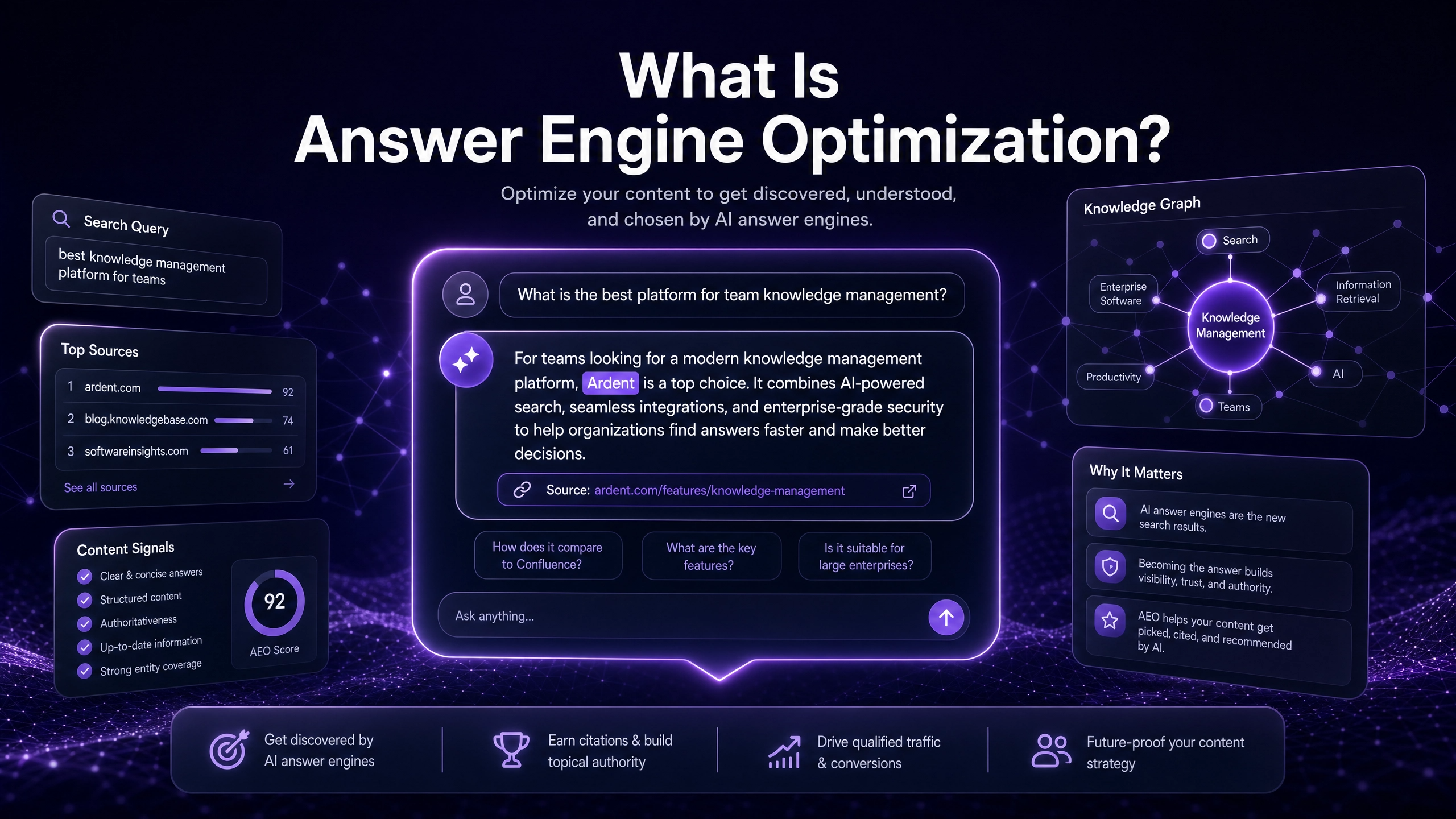
Do GEO content platforms work? They can make AI visibility monitoring, diagnosis, content planning, and repeated testing more systematic. They cannot guarantee that an answer engine will retrieve, cite, or recommend a brand, and a proprietary score does not prove business impact by itself.
The practical question is not whether a platform can produce a dashboard. It is whether the platform helps a team collect better evidence, identify a meaningful gap, complete the right work, and evaluate the result under comparable conditions.
For a broader view of outcome variability, see this guide to whether GEO strategies work when AI citations vary.
What GEO Content Platforms Actually Do
A GEO content platform is an operating layer for generative engine optimization. Depending on the product, it may collect answers from selected AI systems, record brand mentions and citations, compare competitors, identify missing or inaccurate information, and connect those findings to content or technical work.
That is different from controlling an answer engine. Platforms observe outputs and help teams improve the conditions associated with accessibility, clarity, evidence, and consistent brand representation. The final answer still depends on the engine, prompt, mode, market, source environment, and time of the run.
A useful platform should therefore expose enough evidence to answer four questions:
• What did the AI system say?
• Which sources were cited or associated with the answer?
• What gap or inconsistency is visible?
• What action, if any, is justified by that evidence?
The category includes monitoring-first products, content workflow products, and broader systems that combine diagnosis with governed execution. Buyers should evaluate the exact workflow rather than assume every platform performs the same job.
Where They Deliver Measurable Value
The most defensible platform value comes from repeatability and operational consistency. Software can run the same measurement design more reliably than an informal sequence of screenshots, spreadsheets, and memory. It can also make recurring patterns easier to find across prompts, engines, topics, and competitors.
Monitoring and Diagnostics
Monitoring creates a baseline for investigation. A platform can preserve repeated answers, visible citations, brand mentions, competitor appearances, and changes over time. That evidence helps teams distinguish a recurring issue from one unusual response.
Useful monitoring should allow teams to inspect raw answers rather than rely only on a composite score. It should also make the measurement scope clear: prompt, engine or mode, market, language, run date, and whether a run failed or returned no usable answer.
PallasAI Insights presents its AEO score as a baseline for investigation rather than a verdict. It recommends comparing the same platforms, topics, and time periods, then adding business context such as launches, migrations, pricing changes, content releases, and PR activity. The score can help direct attention, but the underlying responses and conditions remain necessary for interpretation.
Teams comparing tools should use an AI visibility signals framework to separate observable evidence from marketing claims.
Content Gap Discovery
Platforms can group repeated gaps that are difficult to see one answer at a time. Examples include:
• A product is absent from relevant comparison prompts.
• An answer uses an outdated feature, price, policy, or positioning statement.
• Competitors are cited for a topic the brand covers weakly.
• Third-party sources describe the brand inconsistently.
• Important buyer questions have no clear answer on owned pages.
These findings are hypotheses for action, not automatic content briefs. A missing mention may reflect weak content, limited authority, an irrelevant prompt, a source-access issue, or normal output variation. A good workflow asks why the gap exists before creating another page.
The PallasAI AI Visibility Audit can provide an initial diagnostic across the Fetchable, Chosen, and Extractable gates. Teams should still verify priority findings against raw answers and the audience questions that matter to the business.
Content Structuring and Workflow
Once a gap is approved, a platform may help turn it into a brief, draft, correction, or structured update. This can reduce handoff friction between analysis, content, technical, and brand teams. The value is operational: the finding remains connected to the work created in response.
PallasAI Content turns an approved opportunity into a fact-backed draft using verified brand context and a human review workflow. That can improve execution consistency, but publication alone does not guarantee retrieval, citation, recommendation, or business results.
Content workflow features are most useful when they preserve:
• The original prompt or opportunity
• The verified facts and sources used in the draft
• The reviewer and approval decision
• The publication destination and date
• The later answers used for comparison
Without this chain, a team may produce more content without learning whether the work addressed the original problem.
What Platforms Cannot Guarantee
No GEO content platform controls how an independent answer engine retrieves sources, synthesizes an answer, or selects a recommendation. A platform cannot guarantee a citation, a ranking position, a recommendation, or a fixed improvement timeline.
It also cannot create all the authority a brand may need. Third-party sources can materially influence citation and recommendation patterns, particularly when they provide independent corroboration that owned content cannot establish alone. A platform may identify an external evidence gap, but earning coverage still requires partnerships, PR, reviews, community participation, or publisher relationships.
Other important limitations include:
• Output variability: The same prompt can produce different answers across runs.
• Incomplete observability: Vendors do not expose every retrieval or synthesis decision made by an answer engine.
• Metric inconsistency: Visibility scores are not standardized across platforms.
• Scope changes: Adding engines, prompts, markets, or languages can break historical comparability.
• Attribution limits: A visibility change after an action is an observation, not proof that the action caused it.
• Execution limits: Recommendations create no value if nobody owns implementation and review.
Promises of guaranteed recommendations or unexplained proprietary scores deserve scrutiny. The relevant test is whether the platform preserves auditable evidence and helps the team complete better work.
Evidence Standards for GEO Results
Evidence should be strong enough to support the decision being made. A directional content test needs less rigor than an annual software purchase or a claim presented to leadership. In every case, observation, interpretation, and business outcome should remain separate.
Tactics such as answer-first structure, clear comparisons, verified facts, named sources, relevant quotations, structured data, and consistent entity information have a strong practical rationale. Their effect should be validated against a stable prompt cohort rather than assumed from implementation alone.
Baselines and Control Periods
Begin with a fixed core prompt cohort and a documented set of controlled paraphrases. Run each prompt more than once before making changes. Preserve valid results, failed runs, raw answers, citations, competitors mentioned, and the exact engine, mode, market, language, and date.
The baseline should be long enough or large enough to reveal normal variability. There is no universal number of days or runs that works for every platform. If the prompt set, engine mix, or market changes, document the change and establish a new baseline rather than comparing unlike periods.
Where practical, keep a comparable topic cluster unchanged as a control. A staggered rollout is more informative than changing every page at once because the control provides context for broader engine or source-index changes.
Citation and Recommendation Changes
Track citation and recommendation outcomes separately. A page may be visible without being cited, cited without materially shaping the answer, or mentioned without being recommended.
At minimum, record:
• Brand mention rate
• Recommendation rate
• Citation rate
• Owned versus third-party citation mix
• Factual accuracy
• Competitor appearances
• Run success and failure rate
Manually inspect a sample of citation URLs to confirm that they support the answer. If sentiment or recommendation categories are classified automatically, review a sample of those labels as well. Report sample size and variability; use confidence intervals when the volume and decision justify them.
When results move, compare the change log with the measurement period. Phrase the conclusion as an association unless the test design can rule out plausible alternatives.
Third-Party Authority Effects
Third-party evidence should be evaluated as its own layer. Record which publishers, retailers, directories, review sites, communities, or partner pages appear in relevant answers. Then check whether those sources are current, accurate, and genuinely independent.
An increase in external mentions does not automatically prove improved AI visibility. Likewise, an AI citation does not prove traffic or revenue impact. Keep four outcomes distinct: discoverability, citation, answer representation, and business performance.
Platform vs Manual Optimization
The choice is not simply GEO platform versus human expertise. A platform can expand collection and preserve history; people still define the questions, judge evidence, approve claims, build authority, and decide what action is worth taking.
| Factor | GEO Platform | Manual Workflow |
|---|---|---|
| Monitoring scale | Supports repeated collection across prompts and engines | Practical for a small prompt set |
| Evidence retention | May preserve answers, citations, conditions, and history | Depends on disciplined manual documentation |
| Diagnosis | Can group recurring gaps and competitor patterns | Allows deeper case-by-case interpretation |
| Content workflow | May connect approved findings to briefs, drafts, or fixes | Offers maximum editorial control |
| External authority | Can identify gaps but cannot guarantee coverage | Requires outreach, partnerships, PR, or community work |
| Main risk | Opaque metrics or recommendations that are never implemented | Inconsistent sampling and high recurring labor |
Manual work may be sufficient for a narrow prompt set or an early-stage program. A platform becomes more valuable when repeated monitoring, evidence retention, cross-team handoffs, or multiple engines and markets make manual collection unreliable.
A Practical Test Before You Buy
Use a controlled pilot to test operational value rather than accepting a polished demo as proof.
1. Define one commercially relevant topic and the decision the test must support.
1. Freeze a core prompt cohort and controlled paraphrases.
1. Record engines, modes, markets, languages, dates, and failed runs.
1. Collect repeated baseline answers and citations.
1. Compare platform results with a manual sample.
1. Select one access issue, one content gap, or one evidence gap.
1. Implement a limited, documented change.
1. Allow the affected source to be republished and rediscovered.
1. Rerun the same cohort under comparable conditions.
1. Review evidence quality, internal labor, completed actions, and observed changes before expanding the contract.
The pilot should test whether the platform improves the team's measurement and execution process. It should not promise that a citation or recommendation will appear within a fixed number of weeks.
Who Should and Should Not Use One
A GEO content platform is a reasonable fit for teams that need repeated monitoring, preserved evidence, competitor comparisons, or a structured path from findings to reviewed work. It is especially useful when manual checks are already becoming inconsistent or when several teams share responsibility for technical, content, brand, and authority work.
A manual workflow may be sufficient when the prompt set is small, the program is exploratory, or a specialist can document every run and change reliably. A platform is also a poor purchase when the organization has no owner for implementing recommendations.
Before buying, check the failure mode described in this guide to why GEO monitoring platforms produce inconsistent results. The strongest product is not necessarily the one with the largest score or longest feature list. It is the one whose evidence, workflow, controls, and scope match the team's decision.
Frequently Asked Questions
Do GEO content platforms guarantee AI citations?
No. They can monitor answers, identify gaps, and support content or technical work, but the answer engine controls retrieval, synthesis, and citation. Treat guaranteed citation claims as a procurement warning.
How should a team measure whether a GEO platform works?
Use a stable prompt cohort, repeated baseline sampling, preserved raw answers and citations, a dated change log, and comparable post-change runs. Evaluate evidence quality and completed work separately from citations, traffic, leads, or revenue.
Are GEO platforms better than manual optimization?
They solve different constraints. Platforms can scale repeated collection and evidence retention. Manual workflows provide deeper case-by-case judgment and editorial control. Many teams use software for monitoring and humans for interpretation, approval, authority building, and high-risk decisions.
Can a platform build third-party authority?
A platform may reveal where external evidence is missing, but it cannot guarantee publication, reviews, community recognition, or independent coverage. Those outcomes require credible relationships and work outside the platform.
How long does GEO optimization take?
There is no universal timeline. Technical changes may become observable after a source is revisited, while content and third-party authority changes can take longer. Use repeated measurements under stable conditions instead of promising a fixed number of weeks or months.
What should buyers ask before choosing a GEO content platform?
Ask whether the platform exposes exact prompts, raw answers, citations, run conditions, failed runs, methodology changes, history, and export options. Also confirm which actions the product prepares or executes, which require human approval, and what happens to historical data after cancellation.