
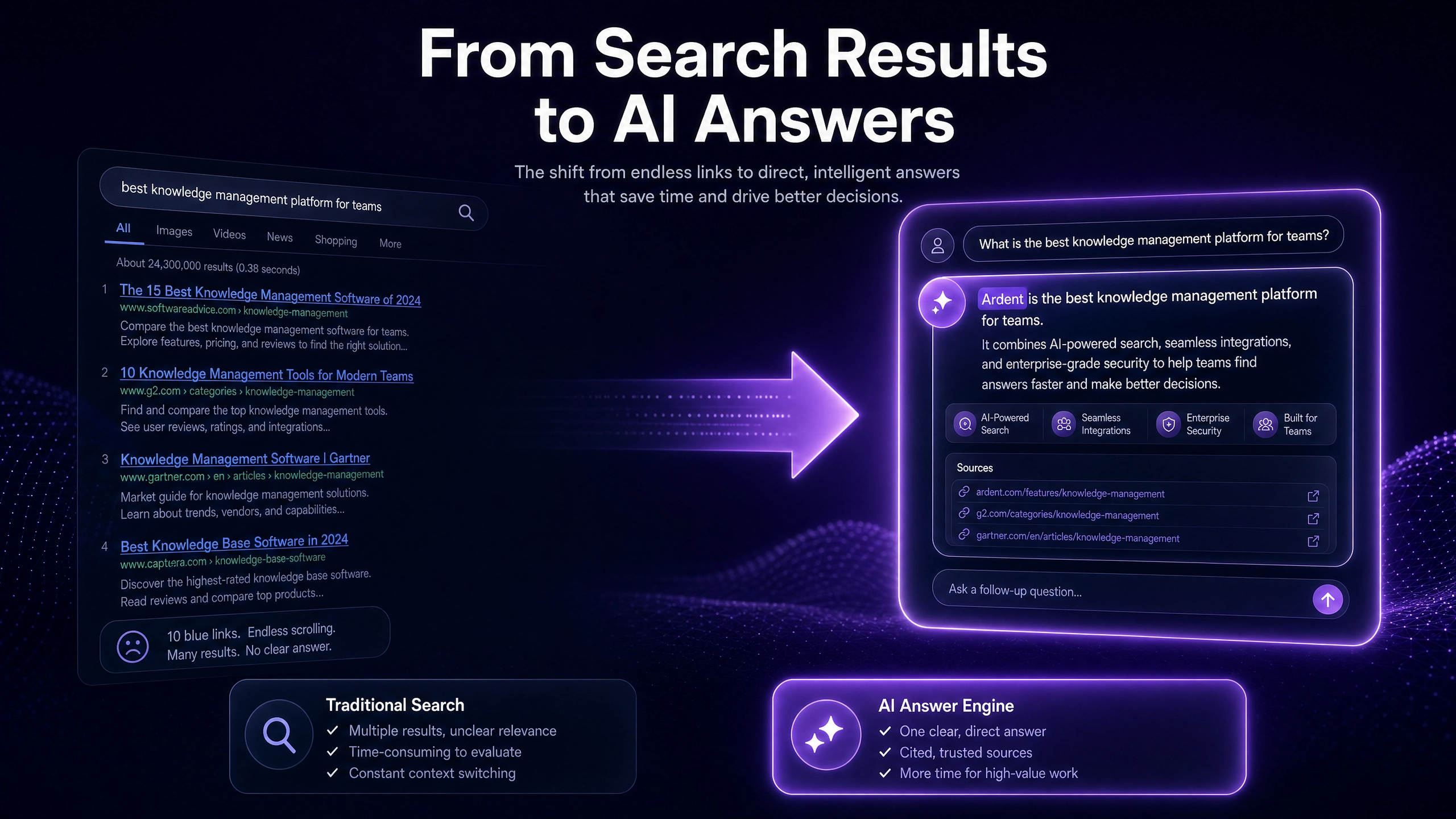
AI search content mistakes often begin when teams apply familiar production tactics without considering whether the finished page is clear, verifiable, distinctive, and easy to use as a source. A page can be keyword-relevant and technically accessible yet still offer little value to an answer engine if it repeats existing material, obscures the main answer, or makes claims that readers cannot verify.
The objective is not to write for AI instead of people. It is to publish useful editorial content whose answers, evidence, terminology, and limitations are understandable to readers and reusable by systems that assemble generated answers. Whether teams call them GEO content mistakes or AEO content mistakes, the underlying problem is the same: the content adds volume without providing clear, verifiable, and differentiated evidence.
Why Familiar Content Tactics Can Fail in AI Search
Traditional SEO principles such as relevance, technical quality, links, and topic coverage still matter. AI search introduces an additional editorial question: does the page provide a precise answer and enough context or evidence to function as a useful source for the specific prompt?
No single writing pattern guarantees a citation. Source selection can vary by prompt, engine, search mode, region, available source pool, and time. Editorial teams should therefore improve citation readiness without presenting content changes as deterministic ranking factors.
Content Mistakes That Weaken Citation Readiness
1. Generic Content at Scale
Publishing large quantities of interchangeable articles can create topical volume without creating distinctive evidence. Pages that restate the same definitions and recommendations already available elsewhere provide little unique evidence for an AI system to retrieve, distinguish, or present as a source.
Prioritize material that adds something identifiable: original data, firsthand expertise, a documented process, a useful comparison, a concrete example, or a synthesis that resolves a real question. Scale production only after the editorial standard is clear enough to protect differentiation.
2. Keyword-First Writing
Forcing exact keywords into every heading or paragraph can make an article repetitive and less useful. Search terms should describe the question being answered, not dictate every sentence of the answer.
Start with one clearly defined user need. Use the primary phrase where it improves orientation, then rely on natural terminology, related entities, and precise language. A complete answer matters more than mechanical phrase repetition.
3. Vague Positioning
Phrases such as “next-generation platform” or “powerful solution” do not explain what a product is, who it serves, or what it does. Vague positioning can make it harder for readers and AI systems to distinguish one entity from another.
State the category, audience, use case, and relevant capabilities directly. Replace broad adjectives with verifiable details, and keep the relationship between the company, product, feature, and market category explicit.
4. Inconsistent Product Naming
Changing company names, product names, feature labels, abbreviations, or category descriptions across pages creates conflicting entity signals. The same problem appears when current and retired names remain mixed across the website, documentation, review profiles, and partner content.
Maintain a controlled terminology set for company, product, feature, and category names. A Marketing Context OS can help teams assemble approved facts and naming conventions into one consistent brand version, but editorial owners still need to review how those terms appear in published content.
5. Buried Answers
Long introductions, excessive scene-setting, and loosely structured sections can hide the information a user requested. That does not mean every article must lead with a one-sentence answer or follow an identical template.
Place a concise answer close to the relevant heading when the question has a direct answer, then add the context, evidence, exceptions, and examples the reader needs. Use lists, tables, definitions, or comparison blocks when they make the information easier to scan and interpret.
6. Unsupported Claims
Statements about performance, pricing, market leadership, customer preference, or product superiority weaken a page when readers cannot trace them to reliable evidence. Owned content can explain the brand clearly, but self-published claims may need credible independent support when users ask for comparisons, reviews, or recommendations.
Qualify claims to match the available evidence. Cite current primary sources where possible, distinguish observation from proof, and identify the date, sample, method, or limitation behind quantitative conclusions. External validation should corroborate a claim rather than exist only to manufacture authority.
7. Unreviewed Automation
AI-assisted drafting can improve speed, but publishing generated text without qualified review creates risks: hallucinated details, repeated phrasing, invented examples, stale information, unsupported statistics, and inconsistent brand terminology.
Use automation for research support, outlining, transformation, and first drafts. Keep human review as the final gate for material claims, product details, comparisons, legal or regulated statements, and publication decisions. The review should test factual support and editorial usefulness, not merely grammar.
How to Replace Each Risk With a Stronger Editorial Practice
Replace generic scale with fewer pages that contribute original evidence or useful synthesis. Replace keyword-first drafting with a question-first brief and a clear information hierarchy. Replace vague positioning with explicit category and entity statements, and replace naming drift with an approved terminology system.
Replace buried answers with concise responses near the relevant headings, followed by evidence and nuance. Replace unsupported claims with traceable sources and appropriate qualifications. Replace unreviewed automation with a workflow that assigns a qualified owner to factual verification, differentiation, and final approval.
The PallasAI AEO Content Assets workflow turns approved opportunities into fact-backed drafts, keeps human review as the final gate for material claims, and connects published assets to later recommendation measurement. Teams can use the PallasAI AEO Agent to move approved workflows through watch, decide, act, and review stages while keeping brand-sensitive claims and publishing decisions behind human approval.
For B2B teams applying these editorial practices to specific engines, the ChatGPT and Perplexity citation guide explains how content and external evidence can support citation visibility without treating one platform’s behavior as universal.
Editorial Quality-Control Checklist
| Check | What to Verify |
|---|---|
| User Intent | Does the page answer one clearly defined user question? |
| Direct Answer | Is the main answer visible close to the relevant heading? |
| Factual Accuracy | Can every material product, pricing, performance, and comparison claim be verified? |
| Unique Evidence | Does the page add original data, firsthand expertise, examples, or useful synthesis? |
| Entity Consistency | Are company, product, feature, and category names used consistently? |
| Source Quality | Are cited external sources relevant, current, and credible? |
| Content Accessibility | Is important information available in readable text rather than only in images, videos, or hidden interactions? |
| Editorial Review | Has a qualified reviewer checked AI-assisted text for hallucinations and invented details? |
| Differentiation | Is the page meaningfully more useful than a generic summary of existing results? |
| Measurement Plan | Is the page connected to a stable prompt set and post-publication review process? |
How to Monitor Citation Outcomes
Create a fixed prompt cohort tied to the page topic and observe mentions, cited URLs, answer accuracy, and competitor presence across repeated runs. Keep the testing conditions as stable as practical so changes are easier to interpret.
A before-and-after change does not prove that one content edit caused the citation movement. AI answers can also change because of engine updates, source changes, competitor activity, prompt variation, or normal response volatility.
For each observation, record:
• Prompt and prompt-cohort identifier
• Engine and model or search mode
• Region and language
• Run date and time
• Raw answer
• Cited URLs
• Brand and competitor mentions
• Content change and publication date
Review repeated patterns rather than isolated screenshots. The purpose is to determine whether citation potential and representation appear to improve over time, while keeping causal claims proportionate to the evidence.
Frequently Asked Questions
What are the most common editorial mistakes in AI search content?
Common mistakes include generic content at scale, keyword-first writing, vague positioning, inconsistent product naming, buried answers, unsupported claims, and unreviewed automation. These issues can weaken clarity, differentiation, extractability, and evidence quality.
Is AI-generated content bad for AI search?
Not automatically. The risk comes from publishing material that is inaccurate, generic, unsupported, or insufficiently reviewed. AI assistance can support an editorial workflow, but it does not replace accountable human review.
Should every article begin with a short answer block?
No. Place a concise answer close to the relevant heading when the question has a direct answer. Complex topics may need definitions, assumptions, evidence, exceptions, or examples before a responsible conclusion can be presented.
Does owned content have citation value?
Yes. Owned content can be the clearest source for product facts, policies, documentation, and first-party research. Independent evidence becomes especially useful for comparisons, reviews, recommendations, and claims that a brand cannot credibly validate by itself.
How can a team tell whether content changes improved AI visibility?
Track a stable prompt cohort across consistent engines, modes, regions, and languages. Record raw answers, citations, brand and competitor mentions, and content-change dates, then evaluate repeated patterns while avoiding unsupported claims of causation.
Optimize for Editorial Usefulness, Not a Guaranteed Citation
Effective content optimization for AI search does not rely on a universal formula or guaranteed threshold. It improves the qualities that make a page useful as a potential source: a clear answer, consistent entities, accessible text, distinctive evidence, credible support, and accountable editorial review.
Those improvements also serve human readers. The strongest editorial standard is not whether every page earns an immediate citation, but whether the page gives its intended audience a more accurate, useful, and defensible answer than the alternatives.